Paper 4 of 4 of the Pearson Edexcel Higher mock, at full length and with the official time. New questions you won't have seen on our practice pages. Your answers are saved on this device as you go.
Pearson Edexcel Higher speaking test
10 to 12 minutes, 50 marks, after 15 minutes' preparation. In exam order: read aloud, role-play, picture task.
15 minutes' supervised preparation immediately before the test: 14 minutes in the preparation room, then 1 minute in the exam room when you may practise the read aloud text out loud (it is recorded but not marked)
Notes on one sheet of A4, and you may annotate the read aloud text; you can't write on the role play or picture cards
Two weeks before the test you choose the thematic context for the picture task, from two offered at random
No dictionary or other resources
Prepare first, as in the exam, or start the test straight away.
Your cards
Part 1
Read aloud
12 marks · 2 to 2.5 minutes in total
Studying and my future
Your Spanish friend Diego has written to you about his plans for after school.
El verano pasado hice prácticas en un hospital y me gustó mucho.
Por eso, cuando termine el instituto, quiero estudiar medicina en Zaragoza.
Sé que la carrera es larga y difícil, pero vale la pena porque es un trabajo muy útil.
Mis padres me apoyan y mi hermana pequeña dice que seré un médico genial.
55 words. Then two questions about your likes, dislikes and opinions.
opinion: Creo que es una buena idea reason: porque puedes estudiar lo que te interesa y conocer a gente nueva, aunque es bastante caro.
I think it is a good idea because you can study what interests you and meet new people, although it is quite expensive.
Question 2
¿Qué trabajo te gusta más?
opinion: Me gusta mucho el trabajo de profesora, reason: porque me encanta explicar cosas y trabajar con niños.
I really like the job of teacher, because I love explaining things and working with children.
Part 2
Role-play
10 marks · 1 to 1.5 minutes
Campsite
You are at the reception of a campsite in Spain.
Your teacher will play the part of the receptionist and will speak first.
Your teacher will ask questions in Spanish and you must answer in Spanish.
You are expected to say a few words or a short phrase or sentence in response to each prompt. One-word answers will not be enough for full marks.
Your teacher will say: "You are at the reception of a campsite in Spain. I will play the part of the receptionist and will speak first."
Say how many people are in your group.
Say where you want to put your tent.
?Ask a question about the shop.
Say what you will do tomorrow.
?Ask a question about the bikes.
Model answers
Task 1: Say how many people are in your group.
Buenas tardes. ¿Cuántas personas son?
Somos cuatro: mis padres, mi hermano y yo.
There are four of us: my parents, my brother and me.
Task 2: Say where you want to put your tent.
Muy bien. ¿Dónde quiere poner la tienda de campaña?
Queremos un sitio tranquilo cerca de la piscina.
We want a quiet spot near the swimming pool.
Task 3 (?): Ask a question about the shop.
Vale. ¿Tiene una pregunta?
¿Hay una tienda en el camping?
Is there a shop on the campsite?
Task 4: Say what you will do tomorrow.
De acuerdo. ¿Qué hará mañana?
Mañana future: iremos a la playa y por la tarde future: haré una ruta en bici por la montaña.
Tomorrow we will go to the beach and in the afternoon I will go for a bike ride in the mountains.
Task 5 (?): Ask a question about the bikes.
¿Tiene otra pregunta?
¿Se pueden alquilar bicicletas aquí?
Can you hire bikes here?
Part 3
Picture task
28 marks · 7 to 8 minutes: description and questions 2 to 2.5, conversation 5 to 5.5
Travel and tourism
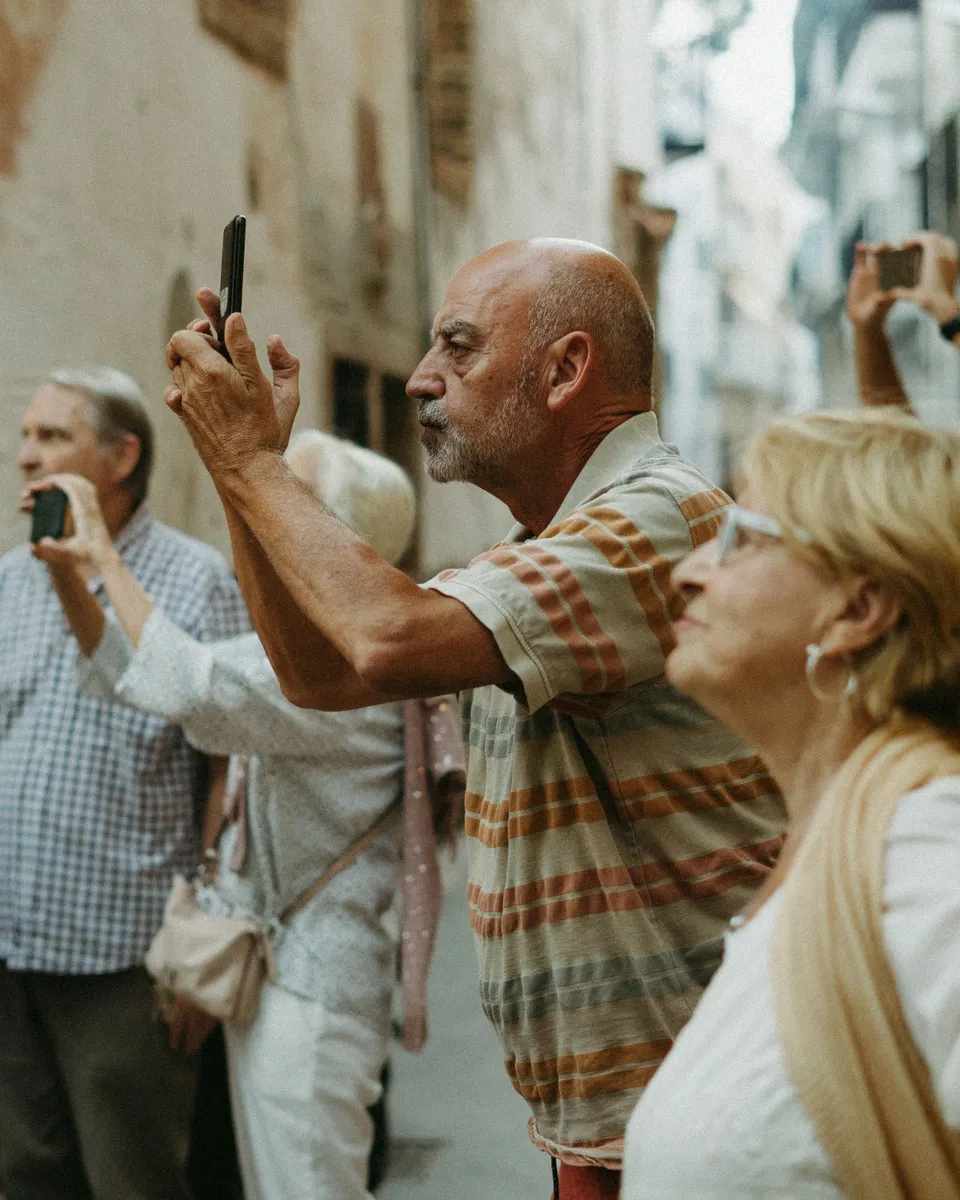
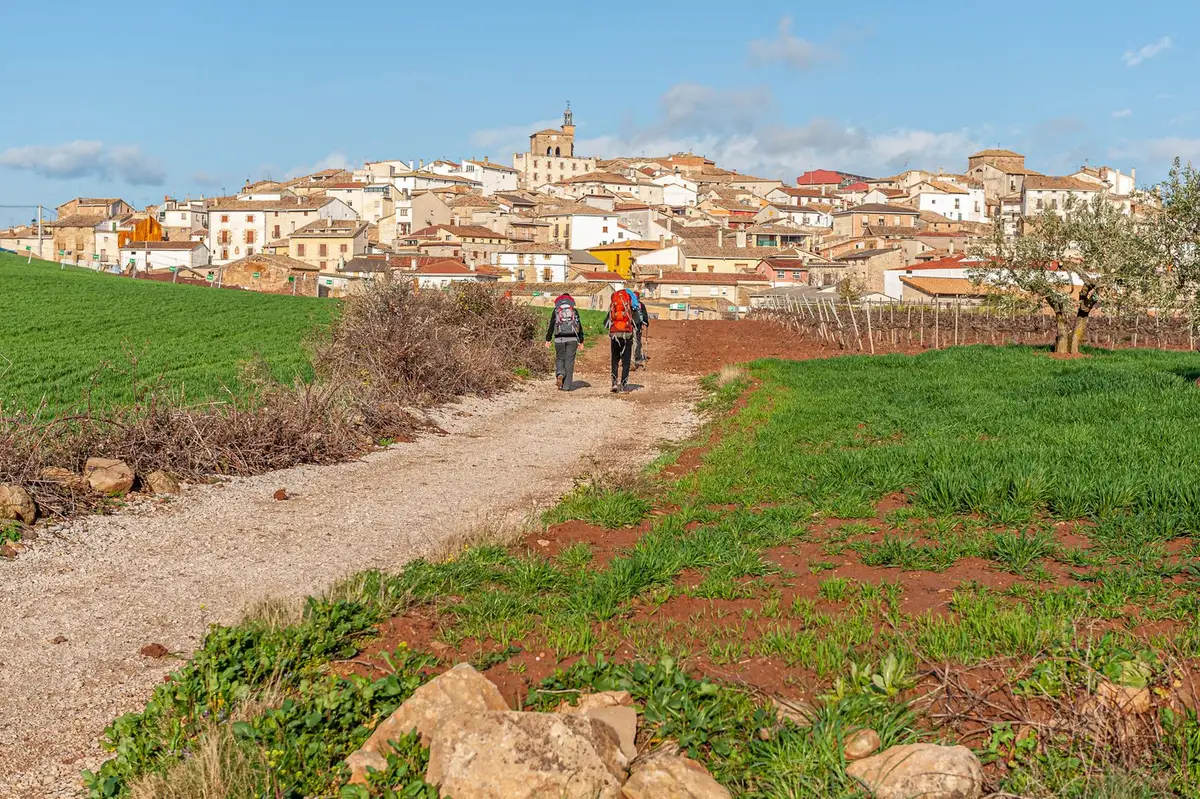
Picture 1Picture 2
Describe your picture (people, location, activity), answer two questions, then a conversation on travel and tourism.
Model answers
Picture 1: the description
En esta foto se ve a un grupo de turistas mayores en una calle pequeña de un pueblo antiguo, probablemente en España. Un señor está haciendo una foto con el móvil y, detrás de él, otras dos personas hacen lo mismo. Delante, una señora rubia con gafas está sonriendo. opinion: Me imagino que están mirando un edificio muy bonito o un monumento, reason: porque miran hacia arriba.
In this picture you can see a group of older tourists in a small street in an old town, probably in Spain. A man is taking a photo with his mobile and, behind him, two other people are doing the same. In front, a blonde woman with glasses is smiling. I imagine they are looking at a very pretty building or a monument, because they are looking up.
Question 1
¿Qué haces para conocer una ciudad nueva?
Normalmente busco información en internet antes del viaje y, cuando llego, paseo por el centro sin prisa. opinion: Lo que más me gusta es probar la comida típica en los mercados.
I usually look for information online before the trip and, when I arrive, I walk round the centre without hurrying. What I like most is trying the local food in the markets.
Question 2
¿Qué hiciste en tus últimas vacaciones?
En mis últimas vacaciones past: fui a Sevilla con mi familia. past: Visitamos el centro histórico y past: dimos un paseo en barco por el río. past: Hacía mucho calor, pero opinion: lo pasé genial.
On my last holiday I went to Seville with my family. We visited the old town and went on a boat trip on the river. It was very hot, but I had a great time.
Conversation 1
¿Qué tipo de vacaciones prefieres?
Prefiero las vacaciones en la naturaleza, reason: porque necesito olvidarme del móvil y del ruido de la ciudad. Sin embargo, mis padres prefieren las ciudades con muchos museos, así que siempre discutimos.
I prefer holidays in nature, because I need to forget about my phone and the noise of the city. However, my parents prefer cities with lots of museums, so we always argue.
Conversation 2
¿Cómo pasaste el verano pasado?
El verano pasado past: trabajé en una cafetería durante un mes y después past: fui a Portugal con dos amigas. past: Viajamos en tren y past: dormimos en hoteles baratos. past: Fue la primera vez que past: viajé sin mis padres.
Last summer I worked in a café for a month and then I went to Portugal with two friends. We travelled by train and slept in cheap hotels. It was the first time I travelled without my parents.
Conversation 3
¿Qué ventajas tiene viajar al extranjero?
Viajar al extranjero te abre la mente: conoces otras culturas, pruebas comidas nuevas y practicas idiomas. opinion: Para mí, complex structure: lo mejor es hablar con la gente del lugar.
Travelling abroad opens your mind: you get to know other cultures, try new food and practise languages. For me, the best thing is talking to local people.
Conversation 4
¿Adónde irás el año que viene?
El año que viene future: iré a España para hacer un intercambio. future: Viviré con una familia en Salamanca y future: asistiré a clases en un instituto. complex structure: Si tengo tiempo, también future: visitaré Madrid.
Next year I will go to Spain on an exchange. I will live with a family in Salamanca and attend lessons at a school. If I have time, I will also visit Madrid.
Conversation 5
¿Es mejor viajar en tren o en avión?
opinion: En mi opinión, el tren es mejor reason: porque contamina menos y es más cómodo. El avión es más rápido, pero conditional: debería ser más caro reason: para proteger el medio ambiente.
In my opinion the train is better because it pollutes less and is more comfortable. The plane is faster, but it should be more expensive to protect the environment.
Picture 2: the description
En esta foto hay unas personas que caminan por un camino de tierra entre campos verdes. Llevan mochilas enormes, así que opinion: creo que están haciendo el Camino de Santiago. Al fondo hay un pueblo antiguo con una iglesia. Hace sol y el cielo está azul. opinion: Me parece una forma estupenda de viajar, reason: porque conoces el paisaje y haces ejercicio a la vez.
In this picture there are some people walking along a dirt track between green fields. They are carrying huge rucksacks, so I think they are doing the Camino de Santiago. In the background there is an old village with a church. It is sunny and the sky is blue. I think it is a great way to travel, because you get to know the landscape and you exercise at the same time.
Question 1
¿Qué piensas de las vacaciones activas?
opinion: Me encantan, reason: porque no me gusta pasar todo el día en la playa sin hacer nada. Prefiero hacer rutas a pie o montar en bici, aunque a veces termino muy cansada.
I love them, because I do not like spending all day on the beach doing nothing. I prefer walking routes or cycling, although sometimes I end up very tired.
Question 2
¿Cuál fue el mejor viaje que hiciste con tu familia?
El mejor viaje past: fue a los Pirineos hace dos años. past: Nos quedamos en un hotel pequeño en la montaña y past: subimos a un lago precioso. opinion: Fue inolvidable.
The best trip was to the Pyrenees two years ago. We stayed in a small hotel in the mountains and we climbed up to a beautiful lake. It was unforgettable.
Conversation 1
¿Qué tipo de vacaciones prefieres?
Prefiero las vacaciones en la naturaleza, reason: porque necesito olvidarme del móvil y del ruido de la ciudad. Sin embargo, mis padres prefieren las ciudades con muchos museos, así que siempre discutimos.
I prefer holidays in nature, because I need to forget about my phone and the noise of the city. However, my parents prefer cities with lots of museums, so we always argue.
Conversation 2
¿Cómo pasaste el verano pasado?
El verano pasado past: trabajé en una cafetería durante un mes y después past: fui a Portugal con dos amigas. past: Viajamos en tren y past: dormimos en hoteles baratos. past: Fue la primera vez que past: viajé sin mis padres.
Last summer I worked in a café for a month and then I went to Portugal with two friends. We travelled by train and slept in cheap hotels. It was the first time I travelled without my parents.
Conversation 3
¿Qué ventajas tiene viajar al extranjero?
Viajar al extranjero te abre la mente: conoces otras culturas, pruebas comidas nuevas y practicas idiomas. opinion: Para mí, complex structure: lo mejor es hablar con la gente del lugar.
Travelling abroad opens your mind: you get to know other cultures, try new food and practise languages. For me, the best thing is talking to local people.
Conversation 4
¿Adónde irás el año que viene?
El año que viene future: iré a España para hacer un intercambio. future: Viviré con una familia en Salamanca y future: asistiré a clases en un instituto. complex structure: Si tengo tiempo, también future: visitaré Madrid.
Next year I will go to Spain on an exchange. I will live with a family in Salamanca and attend lessons at a school. If I have time, I will also visit Madrid.
Conversation 5
¿Es mejor viajar en tren o en avión?
opinion: En mi opinión, el tren es mejor reason: porque contamina menos y es más cómodo. El avión es más rápido, pero conditional: debería ser más caro reason: para proteger el medio ambiente.
In my opinion the train is better because it pollutes less and is more comfortable. The plane is faster, but it should be more expensive to protect the environment.
Your recording
Recorded in your browser. Nothing is uploaded, and it's gone when you leave the page.
What the top bands ask for (Higher tier)
Read aloud: pronunciation consistently clear and comprehensible; slips in the sound-symbol correspondences don't affect the message.
Conversation (language), top band: "consistently successful use of three timeframes" (past, present and future).
Conversation (communication): relevant answers, ideas developed with extended sequences of speech.
We use cookies for anonymous statistics that show us which lessons help most, so we can improve them. No ads, and we never sell your data.Cookies give us anonymous statistics to improve the lessons. No ads, never sold.Privacy